1997 Nobel Prize in Chemistry(1)
Reason for Award
for the elucidation of the enzymatic mechanism underlying the synthesis of adenosine triphosphate (ATP)
Laureates
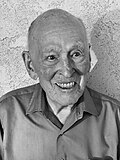
 United States of America
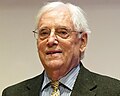
 United Kingdom of Great Britain and Northern Ireland
Explanation
Our bodies use a tiny energy coin called ATP to move and stay alive. Mr. Boyer and Mr. Walker studied a small machine, ATP synthase, that makes this coin by turning like a windmill. Just as water makes a waterwheel spin to generate electricity, tiny particles called protons flow and make the enzyme spin to produce ATP. Their discovery helped us understand how eating food is turned into the power that keeps us active.
Related Keywords
adenosine triphosphate
The universal cellular energy currency; hydrolysis of its terminal phosphate releases about 7.3 kcal/mol of free energy.
ATP synthase
A molecular motor with F1 and F0 sectors that converts proton-motive force into rotary motion to produce ATP.
chemiosmotic theory
Peter Mitchell’s concept that a trans-membrane proton gradient stores energy; fundamental to ATP synthesis.
rotary catalytic mechanism
A scheme in which ATP synthase rotates a central shaft, forcing three catalytic sites to change conformation sequentially.
mitochondrial inner membrane
A high-surface-area membrane housing the electron transport chain and ATP synthase; folded into cristae.
F1 subunit
The soluble portion of ATP synthase, an α3β3γδε complex that catalyzes ATP formation and hydrolysis.
proton-motive force
The electrochemical potential from membrane voltage and pH difference; ~20 kJ/mol of energy per volt.