1954 Nobel Prize in Physics(2)
Reason for Award
for the coincidence method and his discoveries made therewith
Laureates
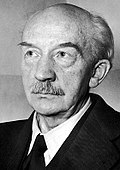
 West Germany
Explanation
Walther Bothe invented a special way to count tiny invisible particles only when they arrive "at the same time." With this, he could clearly confirm reactions happening inside atoms. It is like hearing a clap only when two people clap their hands exactly together. Thanks to this technique, scientists learned much more about how atoms work. Today it helps in medicine and in making energy.
Related Keywords
coincidence method
The coincidence method records an event only when several radiation detectors fire within a narrow time window. It dramatically removes background events and allows analysis of particle correlations and decay chains. The window width is set by detector time constants and electronics, now shortened to sub-nanoseconds. It is indispensable in accelerator-based triggers and TOF-PET scanners. The same principle is used for counting entangled photons in quantum optics.
Geiger–Müller counter
A Geiger–Müller counter is a gas-filled tube with high voltage that yields an electrical pulse when ionization occurs. It has high sensitivity but poor energy resolution, so it is mainly used for presence/absence detection. Bothe arranged multiple tubes in series and took coincidences to suppress random pulses. The device is still widely used in education and environmental monitoring. It can detect electrons, photons, alpha particles, and more.
nuclear reaction
A nuclear reaction occurs when an atomic nucleus collides with another nucleus or particle, producing new nuclei and radiation. Energies are in the MeV range, far higher than chemical reactions. Bothe’s work enabled coincidence detection of reaction products, allowing detailed study of correlations between recoil nuclei and emitted photons. It advanced understanding of fusion, fission, and isotope production. It underpins medical isotope production and nuclear-energy technologies.
cosmic rays
Cosmic rays are high-energy charged particles and γ-rays arriving at Earth from space. Primary cosmic rays are mainly protons and create showers of secondary particles when hitting the atmosphere. Bothe showed with coincidence equipment that cosmic rays consist of individual particles, launching cosmic-ray physics. Today Cherenkov telescopes and underground muon detectors continue the study. Cosmic rays carry information about cosmic accelerators and are discussed for their effects on aviation and climate.
particle detection
Particle detection refers to techniques for measuring the type, energy, and arrival direction of radiation. Methods include gas detectors, scintillators, and semiconductor detectors. Combining coincidence counting and time resolution allows easier identification of complex events. Bothe’s work marked the start of real-time electronic processing. Modern colliders such as the LHC use hundreds of millions of detector channels synchronized to nanoseconds.
anticoincidence
Anticoincidence accepts an event only when specified detectors remain silent, effectively vetoing unwanted particles. It is powerful for background suppression and particle identification, widely used in γ-ray satellites and dark-matter searches. Combined with coincidences, complex trigger conditions improve collection of rare events. The vacuum-tube logic of Bothe’s era is now implemented in fast FPGAs and ASICs.