1961 Nobel Prize in Physics(2)
Reason for Award
for his researches concerning the resonance absorption of gamma radiation and his discovery in this connection of the effect which bears his name (the Mössbauer effect)
Laureates
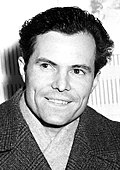
 West Germany
Explanation
Atomic nuclei can absorb or emit specific amounts of energy. Normally, when a nucleus emits a gamma ray it recoils slightly, shifting the energy. Rudolf Mössbauer discovered that inside a rigid crystal the nucleus moves together with the whole lattice, so there is almost no recoil when it emits or absorbs a gamma ray. In this recoil-free state the color of the gamma ray is extremely sharp. Shining such sharp gamma rays on a substance and measuring how much is absorbed reveals detailed information about the material. The Mössbauer effect has therefore become useful in geology, chemistry and many other fields.
Related Keywords
Mössbauer effect
The Mössbauer effect is the recoil-free emission and absorption of gamma rays by nuclei in a solid. Absence of recoil collapses the linewidth to its natural value, giving extremely high energy resolution. First observed in 1958 with 57Fe, it has since been extended to many isotopes. The effect depends strongly on lattice rigidity and temperature, with lower temperatures providing higher sensitivity. It enables detailed, non-destructive studies of chemical state and magnetic order.
gamma rays
Gamma rays are the most energetic electromagnetic waves, with wavelengths below a picometre. They originate from nuclear transitions and typically carry energies from keV to MeV. Their high energy allows them to penetrate matter, making them useful in radiation therapy and cosmic-ray studies. In Mössbauer spectroscopy narrowly defined gamma energies such as 14.4 keV are crucial. Precise resonance-absorption measurements reveal hyperfine interactions of nuclear levels.
resonance absorption
Resonance absorption occurs when photon energy matches the level spacing of the absorber, dramatically increasing absorption probability. Observing lines limited by the natural width allows those spacings to be measured very precisely. In the Mössbauer effect the recoil-free condition makes the linewidth extraordinarily narrow. Doppler velocity modulation is used to sweep energy and record the absorption spectrum. Similar principles are applied in laser and astrophysical spectroscopy.
recoil-free emission
Recoil-free emission means that when a photon is emitted or absorbed the nucleus experiences virtually no backward motion. The entire crystal lattice shares the momentum, so no phonon is excited. There is therefore no energy loss and the resonance condition is preserved exactly. The recoil-free fraction f depends on temperature and lattice constants, reaching its maximum in materials with high Debye temperatures at low temperature. This mechanism makes Mössbauer lines extraordinarily sharp.
hyperfine interaction
Hyperfine interaction is the coupling between a nucleus's magnetic or electric multipole moments and the surrounding electron cloud and crystal fields. In Mössbauer spectra it appears as line splittings or shifts. Magnetic splitting reveals internal magnetic fields, while quadrupole splitting reflects the symmetry of the electric field gradient. These parameters provide insight into chemical bonding and spin order. High-resolution data are vital for materials design and for testing ab-initio calculations.
Mössbauer spectroscopy
Mössbauer spectroscopy probes atomic nuclei in materials by using resonance absorption of recoil-free gamma rays. A velocity-controlled radioactive source and a detector record the absorption spectrum, from which hyperfine parameters are extracted. Only micrograms of sample are needed, and the method reveals local environments rather than bulk averages. It is widely employed in geology, metallurgy and bioinorganic chemistry. Instruments based on this technique flew on the Mars rovers Spirit and Opportunity, successfully analysing Martian minerals.