2005 Nobel Prize in Physics(2)
Reason for Award
For their contributions to the development of laser-based precision spectroscopy, including the optical frequency comb technique. Through papers such as Science 288 (2000) 635-639, Rev. Sci. Instrum. 72 (2001) 3749-3771, and Phys. Rev. Lett. 87 (2001) 270801, they connected optical frequencies across the visible and infrared ranges to absolute references.
Laureates
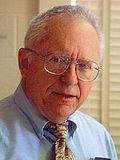
 United States of America
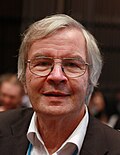
 Germany
Explanation
The more accurate our clocks and rulers are, the more useful they become. Dr. Hall and Dr. Hänsch invented a way to line up laser light like the teeth of a comb so each color (frequency) can be counted like numbers. Thanks to this, we can build super-precise GPS and even better clocks for use on Earth and in space.
Related Keywords
optical frequency comb
A spectrum of hundreds of thousands of evenly spaced sharp lines produced by mode-locked lasers. The spacing is the repetition rate f_r and the overall offset is f_0. When linked to a microwave clock it becomes a 'ruler of light' that counts optical frequencies directly.
precision spectroscopy
Techniques that measure atomic and molecular energy level differences with extremely high resolution. Introduction of frequency combs allows quantification of sub-picometer linewidths, enabling tests of fundamental constants and searches for new physics.
mode-locked laser
A laser that phase-locks many longitudinal modes to produce femto- or picosecond pulse trains. Displays short pulses in time and a comb structure in frequency. Frequency-stabilised versions are standard precision-measurement light sources.
femtosecond pulse
Light pulses lasting about 10^-15 s. Used to observe chemical reactions, control ultrafast electronics, and generate XUV harmonics. Their frequency-domain representation forms an optical comb.
optical clock
A clock that uses optical or near-infrared atomic transitions as references. Higher frequencies than microwaves enable potential relative accuracy better than 10^{-18}. Frequency combs bridge optical transitions to microwave standards.
photonic crystal fiber
Optical fiber with microscopic air holes. Its engineered dispersion and high non-linearity create broadband supercontinuum and octave-spanning spectra, essential for measuring f_0.
Doppler-free spectroscopy
Techniques that cancel Doppler broadening from thermal atomic motion. Saturation and two-photon spectroscopy are key examples. Combined with frequency combs, sub-kHz resolution is achievable.
redefinition of the metre
In 1983 the metre was redefined as the distance light travels in 1/299,792,458 s, fixing the speed of light. Frequency combs provide a practical means to realise wavelength standards with high precision via c = fλ.