1949 Nobel Prize in Physiology or Medicine(1)
Reason for Award
for his discovery of the functional organization of the interbrain as a coordinator of the activities of the internal organs
Laureates
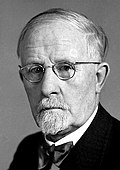
 Switzerland
Explanation
Inside our bodies, the heart keeps beating and our temperature stays steady. Dr. Hess studied a brain area called the “interbrain” (diencephalon) and found that it gives the orders for these actions. He gently passed small electric currents into the brains of cats and watched how their heartbeat and breathing changed. His experiments showed that the interbrain works like a central switchboard for body functions. Thanks to this, we know much more about how the brain keeps the body running smoothly.
Related Keywords
diencephalon
Brain region between the cerebral hemispheres and midbrain, including the thalamus and hypothalamus. Acts as a hub for sensory integration and autonomic regulation.
hypothalamus
Central autonomic–endocrine controller regulating temperature, feeding, and hormone release. Hess’s stimulation work produced a detailed functional map of it.
autonomic nervous system
Consists of sympathetic and parasympathetic divisions controlling involuntary functions such as heartbeat and digestion. Hess showed the hypothalamus is its top-level controller.
homeostasis
The property by which organisms keep internal conditions stable despite external changes. The hypothalamus sits at the center of brain–viscera loops maintaining it.
electrical stimulation technique
Method of passing current through micro-electrodes in brain tissue to evoke behaviors or physiological responses and map function. Refined by Hess and a precursor to modern deep-brain stimulation therapy.