1953 Nobel Prize in Physiology or Medicine(1)
Reason for Award
for the discovery of the citric acid cycle
Laureates
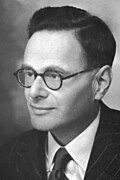
 United Kingdom of Great Britain and Northern Ireland
Explanation
Our bodies live by taking energy from food. Inside each cell, tiny “power plants” called mitochondria run a process known as the citric-acid cycle. Dr. Hans Krebs discovered that bits of food change step-by-step in a circular sequence, releasing energy as they go. Thanks to this work, we know why our breathing needs oxygen. In short, Dr. Krebs uncovered the secret of how our bodies make energy.
Related Keywords
citric acid cycle
A central metabolic pathway that oxidizes acetyl-CoA, supplying NADH and FADH₂ to the respiratory chain. Beyond energy production, it serves as an amphibolic hub furnishing carbon skeletons for numerous biosynthetic reactions.
mitochondrion
A double-membrane organelle in eukaryotic cells that synthesizes ATP by oxidative phosphorylation. It hosts the TCA cycle and β-oxidation, making it central to energy metabolism.
NADH
The reduced form of nicotinamide adenine dinucleotide. Generated in the TCA cycle, it donates electrons to Complex I of the respiratory chain, driving ATP synthesis.
FADH₂
The reduced form of flavin adenine dinucleotide, produced in the succinate→fumarate step. It feeds electrons into Complex II, yielding slightly fewer ATP molecules than NADH.
oxidative decarboxylation
Reactions catalyzed by enzymes such as isocitrate dehydrogenase and α-ketoglutarate dehydrogenase, releasing CO₂ while reducing NAD⁺. These steps efficiently liberate energy and electrons.
allosteric regulation
A control mechanism where molecules other than the substrate bind an enzyme to modulate its activity. In the TCA cycle, ATP/ADP and NADH/NAD⁺ ratios adjust the activity of rate-limiting enzymes.
amphibolic pathway
A pathway used in both catabolism and anabolism. The citric acid cycle is a prime example, contributing to energy generation and providing precursors for biosynthesis.