2005 Nobel Prize
13
laureates
6
fields
2005
Nobel Prize
Nobel Prize in Physics
For his contribution to the quantum theory of optical coherence. In a series of papers, including Phys. Rev. Lett. 10 (1963) 84-86, Phys. Rev. 130 (1963) 2529-2539, and Phys. Rev. 131 (1963) 2766-2788, he created a consistent framework that treats light as both particles and waves.
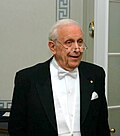
 United States of America
For their contributions to the development of laser-based precision spectroscopy, including the optical frequency comb technique. Through papers such as Science 288 (2000) 635-639, Rev. Sci. Instrum. 72 (2001) 3749-3771, and Phys. Rev. Lett. 87 (2001) 270801, they connected optical frequencies across the visible and infrared ranges to absolute references.

United States of America
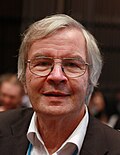
 Germany
Nobel Prize in Chemistry
for the development of the metathesis method in organic synthesis

 France
United States of America
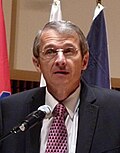
United States of America
Nobel Prize in Physiology or Medicine
for the discovery of the bacterium Helicobacter pylori and its role in gastritis and peptic ulcer disease

 Australia

Australia
Nobel Prize in Literature
for plays that uncover the precipice beneath everyday prattle and force entry into oppression's closed rooms
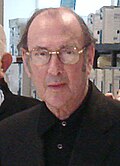
 United Kingdom of Great Britain and Northern Ireland
Nobel Peace Prize
for their efforts to prevent nuclear energy from being used for military purposes and to ensure that nuclear energy for peaceful purposes is used in the safest possible way

 World
World

 Egypt
Egypt
Nobel Memorial Prize in Economic Sciences
for having enhanced our understanding of conflict and cooperation through game-theory analysis

United States of America,
 Israel
United States of America