Search Results
Prizes and laureates matching your filters
for foundational discoveries and inventions that enable machine learning with artificial neural networks
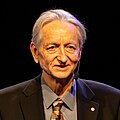
Geoffrey Hinton
United Kingdom of Great Britain and Northern Ireland
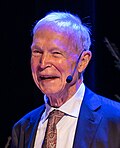
John Hopfield
United States of America
for experimental methods that generate attosecond pulses of light for the study of electron dynamics in matter
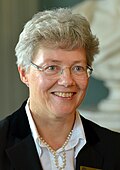
Anne L'Huillier
Sweden, France
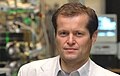
Ferenc Krausz
Austria, Hungary
Pierre Agostini
United States of America, France
for experiments with entangled photons, establishing the violation of Bell inequalities and pioneering quantum information science
John F. Clauser
United States of America
for the physical modelling of Earth’s climate, quantifying variability and reliably predicting global warming
Syukuro Manabe
United States of America, Japan
for the discovery of the interplay of disorder and fluctuations in physical systems from atomic to planetary scales
for the discovery that black hole formation is a robust prediction of the general theory of relativity
Roger Penrose
United Kingdom of Great Britain and Northern Ireland
for the discovery of a supermassive compact object at the centre of our galaxy
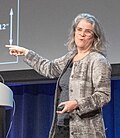
Andrea M. Ghez
United States of America
for theoretical discoveries in physical cosmology
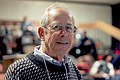
Jim Peebles
United States of America, Canada
for the discovery of an exoplanet orbiting a solar-type star
Didier Queloz
Switzerland
for the development of optical tweezers and their application to biological systems
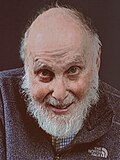
Arthur Ashkin
United States of America
for the development of a method for generating high-intensity, ultra-short laser pulses
for decisive contributions to the LIGO detector and the observation of gravitational waves
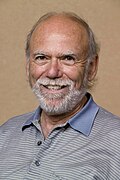
Barry Barish
United States of America
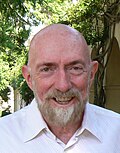
Kip Thorne
United States of America
Rainer Weiss
United States of America, Germany
for theoretical discoveries of topological phase transitions and topological phases of matter
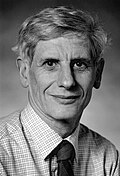
David J. Thouless
United Kingdom of Great Britain and Northern Ireland, United States of America
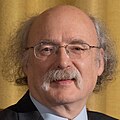
Duncan Haldane
United Kingdom of Great Britain and Northern Ireland, Slovenia
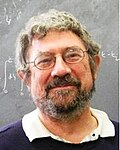
Michael Kosterlitz
United Kingdom of Great Britain and Northern Ireland, United States of America
for the discovery of neutrino oscillations, which shows that neutrinos have mass (Nucl. Phys. B-Proc. Suppl. 77 (1999) 123 〈Kajita〉, 43 〈McDonald〉)
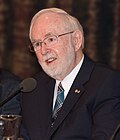
Arthur B. McDonald
Canada
for the invention of efficient blue light-emitting diodes which have enabled bright and energy-saving white light sources
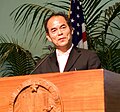
Shuji Nakamura
United States of America, Japan
For the theoretical discovery of the Brout–Englert–Higgs mechanism, proposed in 1964, which explains how elementary particles acquire mass and was later confirmed by the observation of the Higgs boson by the ATLAS and CMS experiments at CERN’s Large Hadron Collider. The award cites the seminal papers Phys. Rev. Lett. 13 (1964) 321 (Englert & Brout), Phys. Rev. Lett. 13 (1964) 508 (Higgs), and Phys. Rev. 145 (1966) 1156 (Higgs).
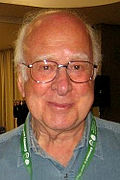
Peter Higgs
United Kingdom of Great Britain and Northern Ireland
for ground-breaking experimental methods that enable measuring and manipulation of individual quantum systems
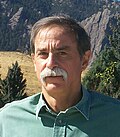
David J. Wineland
United States of America
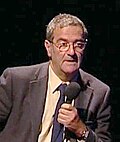
Serge Haroche
France, Morocco
for the discovery of the accelerating expansion of the Universe through observations of distant supernovae (Astrophys. J.: 517 (1999) 565-586; Astrophys. J.: 507 (1998) 46-63; Astron. J.: 116 (1998) 1009-1038)
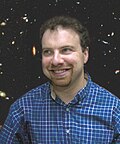
Adam Riess
United States of America
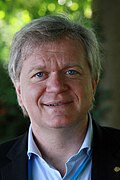
Brian Schmidt
Australia, United States of America
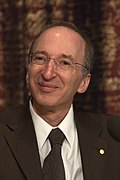
Saul Perlmutter
United States of America
for groundbreaking experiments regarding the two-dimensional material graphene
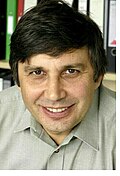
Andre Geim
Netherlands, Russian Federation
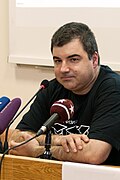
Konstantin Novoselov
Russian Federation, United Kingdom of Great Britain and Northern Ireland
for groundbreaking achievements concerning the transmission of light in fibers for optical communication
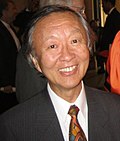
Charles K. Kao
United Kingdom of Great Britain and Northern Ireland, United States of America, Taiwan, Province of China
for the invention of an imaging semiconductor circuit – the CCD sensor
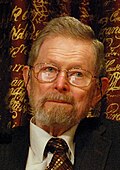
George E. Smith
United States of America
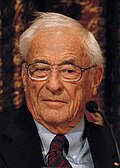
Willard Boyle
United States of America, Canada
for the discovery of the mechanism of spontaneous broken symmetry in subatomic physics (Phys. Rev. 117 (1960) 648; Phys. Rev. 122 (1961) 345-358; Phys. Rev. 124 (1961) 246-254)
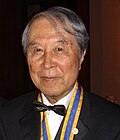
Yoichiro Nambu
United States of America, Japan
for the discovery of the origin of the broken symmetry which predicts the existence of at least three families of quarks in nature (Progress of Theoretical Physics 49 (1973) 652-657)
Discovery of Giant Magnetoresistance (GMR). Key papers: M.N. Baibich et al., Phys. Rev. Lett. 61 (1988) 2472–2475 (Fert group) and G. Binasch et al., Phys. Rev. B 39 (1989) 4828–4830 (Grünberg group).
for the discovery of the black-body form and anisotropy of the cosmic microwave background radiation (Astrophys. J. 420 (1994) 439-444; Astrophys. J. 464 (1996) L1-L4)
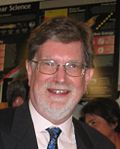
George F. Smoot
United States of America
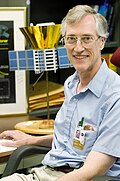
John C. Mather
United States of America
For his contribution to the quantum theory of optical coherence. In a series of papers, including Phys. Rev. Lett. 10 (1963) 84-86, Phys. Rev. 130 (1963) 2529-2539, and Phys. Rev. 131 (1963) 2766-2788, he created a consistent framework that treats light as both particles and waves.
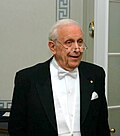
Roy J. Glauber
United States of America
For their contributions to the development of laser-based precision spectroscopy, including the optical frequency comb technique. Through papers such as Science 288 (2000) 635-639, Rev. Sci. Instrum. 72 (2001) 3749-3771, and Phys. Rev. Lett. 87 (2001) 270801, they connected optical frequencies across the visible and infrared ranges to absolute references.
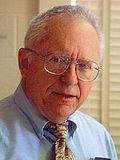
John L. Hall
United States of America
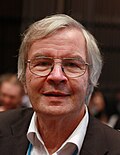
Theodor W. Hänsch
Germany
for the theoretical discovery of asymptotic freedom in the theory of the strong interaction, as reported in a series of papers (Phys. Rev. Lett. 30 (1973) 1343–1346; Phys. Rev. D 8 (1973) 3633–3652; Phys. Rev. D 9 (1974) 980–993; Phys. Rev. Lett. 30 (1973) 1346–1349; Phys. Rep. 14 (1974) 129–180).
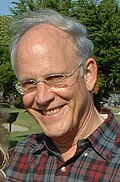
David J. Gross
United States of America
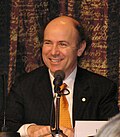
Frank Wilczek
United States of America
H. David Politzer
United States of America
for pioneering contributions to the theory of superconductors and superfluids (Sov. Phys. JETP 5 (1957) 1174–1182; Zh. Eksp. Teor. Fiz. 32 (1957) 1442–1452; Zh. Eksp. Teor. Fiz. 20 (1950) 1064–1082; Phys. Rev. 140 (1965) A1869–A1888; Phys. Rev. 147 (1966) 119–130; Phys. Rev. Lett. 29 (1972) 1227–1230; Phys. Rev. Lett. 31 (1973) 352–355; Rev. Mod. Phys. 47 (1975) 331–414; Phys. Rev. Lett. 46 (1981) 211–214)
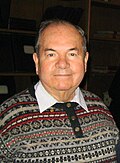
Alexei A. Abrikosov
United States of America, Russian Federation
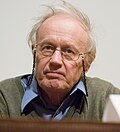
Anthony J. Leggett
United Kingdom of Great Britain and Northern Ireland, United States of America
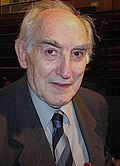
Vitaly L. Ginzburg
Russian Federation
for pioneering contributions to astrophysics, in particular for the detection of cosmic neutrinos
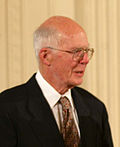
Raymond Davis Jr.
United States of America
Showing the first 30 of 144 results.