
Germany
28
Laureates
1902~2021
Filter by year
Literature
10 laureates
By Field
Laureates Over Time
All Laureates
Klaus Hasselmann
Germany
for the physical modelling of Earth’s climate, quantifying variability and reliably predicting global warming

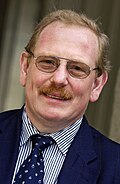
Reinhard Genzel
Germany
for the discovery of a supermassive compact object at the centre of our galaxy
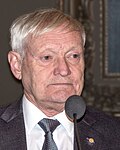
Joachim Frank
Germany,
 United States of America
for developing cryo-electron microscopy for the high-resolution structure determination of biomolecules in solution
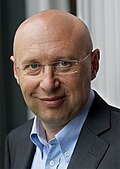
Stefan Hell
Germany,
 Romania
for the development of super-resolved fluorescence microscopy
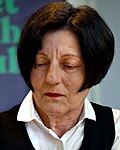
Herta Müller
Germany
(Romania)
who, with the concentration of poetry and the frankness of prose, depicts the landscape of the dispossessed
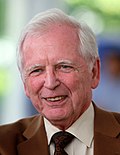
Harald zur Hausen
Germany
Discovery of human papillomaviruses causing cervical cancer
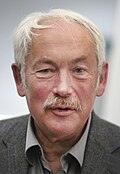
Peter Grünberg
Germany
Discovery of Giant Magnetoresistance (GMR). Key papers: M.N. Baibich et al., Phys. Rev. Lett. 61 (1988) 2472–2475 (Fert group) and G. Binasch et al., Phys. Rev. B 39 (1989) 4828–4830 (Grünberg group).
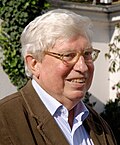
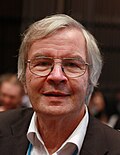
Theodor W. Hänsch
Germany
For their contributions to the development of laser-based precision spectroscopy, including the optical frequency comb technique. Through papers such as Science 288 (2000) 635-639, Rev. Sci. Instrum. 72 (2001) 3749-3771, and Phys. Rev. Lett. 87 (2001) 270801, they connected optical frequencies across the visible and infrared ranges to absolute references.
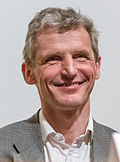
Wolfgang Ketterle
Germany
for the achievement of Bose–Einstein condensation in dilute gases of alkali atoms and for early fundamental studies of the properties of the condensates (Science 269, 198–201, 1995; Phys. Rev. Lett. 77, 420–423, 1996; Phys. Rev. Lett. 75, 3969–3973, 1995).
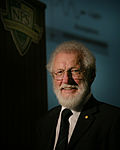
Herbert Kroemer
Germany
for basic work on information and communication technology (for developing semiconductor heterostructures used in high-speed and opto-electronics)
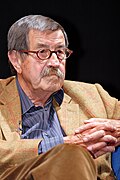
Günter Grass
Germany
whose frolicsome black fables portray the forgotten face of history
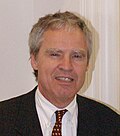
Horst L. Störmer
Germany
for the discovery of a new form of quantum fluid with fractionally charged excitations
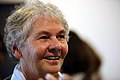
Christiane Nüsslein-Volhard
Germany
for their discoveries concerning the genetic control of early embryonic development
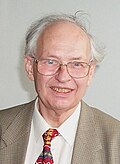
Reinhard Selten
Germany
for their pioneering analysis of equilibria in the theory of non-cooperative games
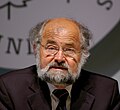
Erwin Neher
Germany
for their discoveries concerning the function of single ion channels in cells
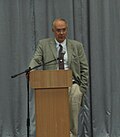
Bert Sakmann
Germany
for their discoveries concerning the function of single ion channels in cells
Georges J. F. Köhler
Germany
for theories concerning the specificity in development and control of the immune system and the discovery of the principle for production of monoclonal antibodies
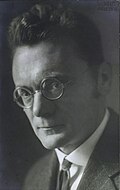
Karl von Frisch
Germany
(Austria)
for their discoveries concerning organization and elicitation of individual and social behaviour patterns
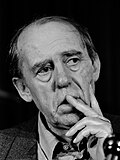
Heinrich Böll
Germany
for his writing which through its combination of a broad perspective on his time and a sensitive skill in characterization has contributed to a renewal of German literature
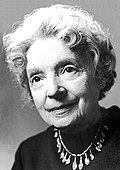
Nelly Sachs
Germany,
 Sweden
(Germany)
Sweden
(Germany)
for her outstanding lyrical and dramatic writing, which interprets Israel's destiny with touching strength
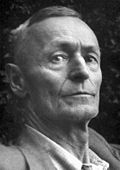
Hermann Hesse
Germany,
 Switzerland
(Germany)
Switzerland
(Germany)
for his inspired writings which, while growing in boldness and penetration, exemplify the classical humanitarian ideals and high qualities of style
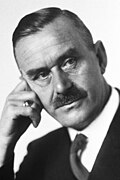
Thomas Mann
Germany
principally for his great novel, Buddenbrooks, which has won steadily increased recognition as one of the classic works of contemporary literature
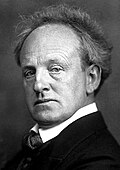
Gerhart Hauptmann
Germany
primarily in recognition of his fruitful, varied and outstanding production in the realm of dramatic art
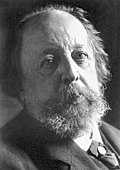
Paul von Heyse
Germany
as a tribute to the consummate artistry, permeated with idealism, which he has demonstrated during his long productive career as a lyric poet, dramatist, novelist and writer of world-renowned short stories
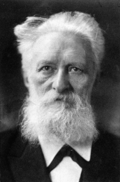
Rudolf Christoph Eucken
Germany
in recognition of his earnest search for truth, his penetrating power of thought, his wide range of vision, and the warmth and strength in presentation with which in his numerous works he has vindicated and developed an idealistic philosophy of life
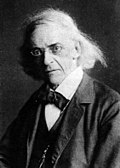
Theodor Mommsen
Germany
the greatest living master of the art of historical writing, with special reference to his monumental work, A History of Rome